 With startup accelerators popping up all over the world, this might not be the most popular thing to write. However, it is something that has been on my mind for the past year. As a mentor for one startup accelerator and a visitor of many, I have gotten to know the inner workings and discussed them with others. And they all lead me to draw the same conclusion. Most accelerators do not fit the needs of startups.
So where is that gap between the holy grail in startup growth and my own statement? Well, let me put it this way. There is a distinct difference between the way forward for a great startup and the goals of an accelerator. This might sound strange to you, but unfortunately, it is very true. The biggest problem is the way in which most accelerators focus on the business model and their demo day. The success of most accelerators is judged on the performance of its startups on a podium on the last day of the program. And most see the number of startups leaving the accelerator with funding as the biggest factor for success. Unfortunately, this is often much further from true success than you would think.
Through the years, I have worked with, spoken with and advised a lot of startups. They all had their share of challenges and even though many saw their funding as their primary problem, it seldom was. I will not deny that you need money to pay your team and improve on your startup. However, more often than not, money will not solve the problems, but only make them bigger.
As a startup, your first focus should be on product development, finding a connection to your market and launching and developing the leanest product you can. Most accelerators agree with this up to this point. After which they will then go and work with you on your business models and marketing strategy to make sure that you are going to get funding down the road. For most startups, this time is put to much better use if they can focus on product development and finding the connection to their market through the feedback of their users. After all, money will only speed up the process and if the direction of the startup is not 100% right, it will only send your startup on a course to distance yourself from the market more and more.
That, to me, is another problem that comes with startup accelerators. Usually, the founders of the accelerator are paid, but none of the mentors are. And there is a problem with that strategy. Naturally, I am such a philanthropist that it never bugged me. But I know that not getting paid brings out the worst in people. I know that many mentors in accelerators only mentor startups in which they see a possible monetary gain over time. Subsequently, they try to steer the startup onto the course which they believe will bring in the big money. This might not be in the interest of the startup at all, but as the mentors are part of the program, their advise is followed. And before you know it, your startup has turned into something that is chasing the possibility of big money with a super smooth pitch, while alienating itself from its potential user base.
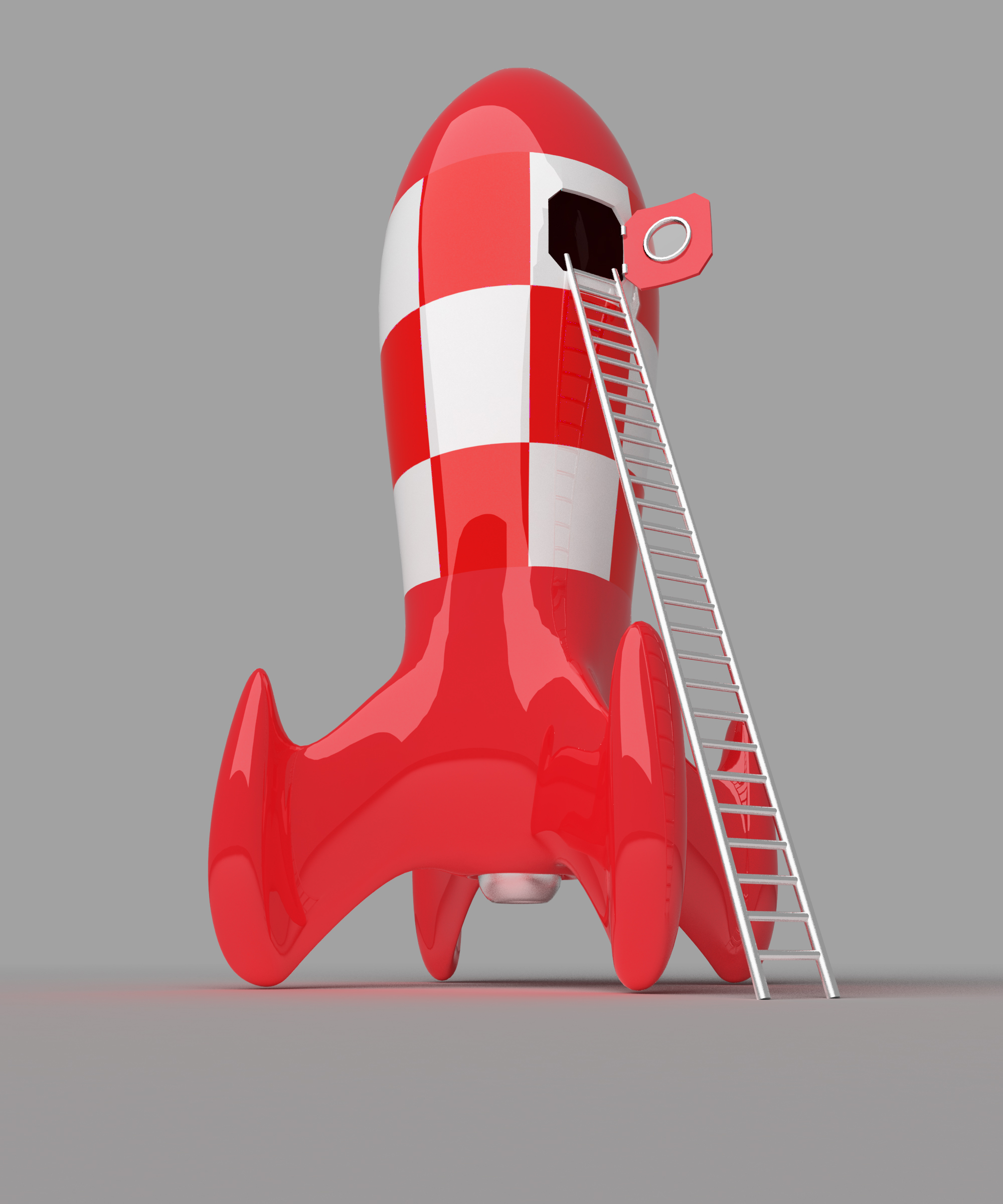
So, are all accelerators evil? No. I think the original idea of a startup accelerator can still be successful. But we need to remember what the original intention of an accelerator was. It was meant to speed up the process of startup development and launch the startup into a higher orbit than it could have obtained in the same timeframe otherwise. If you read this correctly, you will see that there is no specific mention of money or business model in there. Those can be part of the process, but should never be leading. The leading factor in an accelerator is whether they can help you develop both your team as well as your product beyond what you would be capable of yourself.
If you ask me, this is the best -and only- way a good accelerator can work. In my opinion, this is also the only way in which an accelerator can make sure that the startups that go through their program will become exceptional and will achieve great successes. Unlike startups that are built up on a diet of business models and the chase for investment money. It is rare to see those rise beyond average bread and butter companies.
If you are considering joining a startup, make sure you ask the right questions and have a clear idea what is going to happen. And if it is not purely aimed at developing your team and your product, you are better off gathering your own team of mentors around you. It will allow you to grow faster and be a better quicker than you think.

 I just came across the Oil City Aftermath. A short video on the story of a small city that became huge in oil and then fell apart as the oil companies left. I have seen the effects with my own eyes and even back in 2001 did some street photography there to document the demise when I visited my friends there.
 Een poosje geleden begon de ANWB een actie rondom
  Natuurlijk klim ik dan in de telefoon, want ik wil natuurlijk dat mijn vrouw ook al een volwaardig betaler van onze premie gezien wordt. Een vriendelijke stem aan de andere kant van de telefoon legt mij uit dat het systeem alleen maar toelaat dat mijn vrouw als nieuw lid wordt ingevoerd. Vandaar de nieuwe pas. Na wat aandringen beseft zij ook dat dat eigenlijk vreemd is. Ik kan me voorstellen dat de pas alleen geldt voor de gezinsauto. Dat is voor ons overigens prima. Wat ik niet snap, is dat haar hiermee ook de mogelijkheid ontzegd wordt om te profiteren van alle voordelen die het gouden lidmaatschap ons zou brengt. Zij mag dus weer helemaal vanaf 0 beginnen en als ze naar de ANWB winkel wil, dan moet ze toch weer mijn pas meenemen. Dat vind ik toch vreemd.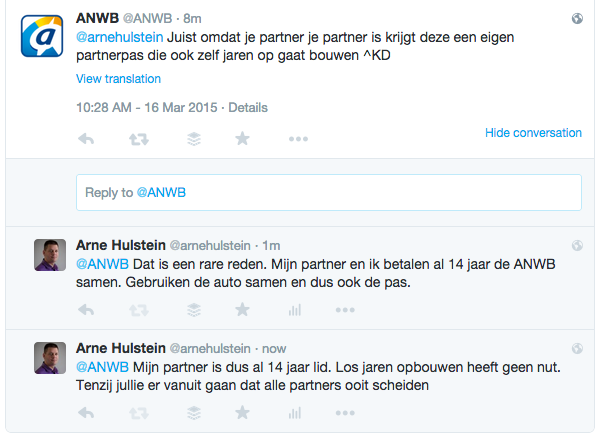





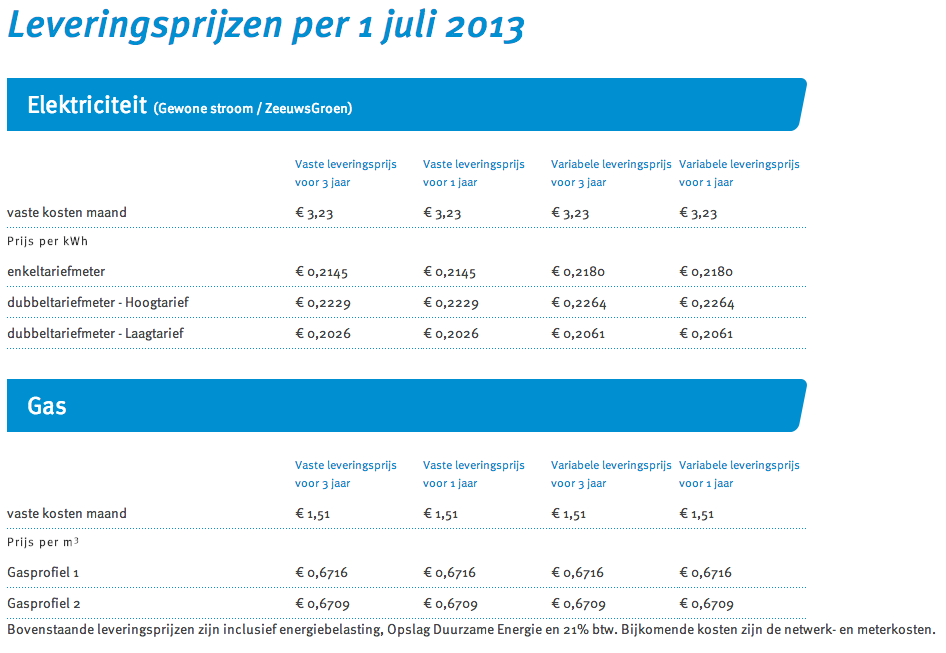
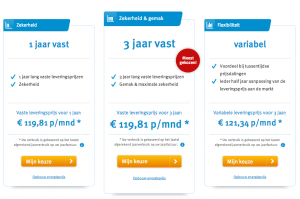 Vorig jaar is mijn leveringscontract voor energie verlopen. Wij zitten al bijna 11 jaar bij Delta NV en zijn daar op zich best tevreden mee. Heb ik dan een speciale band met de Delta? Nou, nee, dat nou ook weer niet. Het is natuurlijk een lokale onderneming en daarmee lijken ze wat minder onpersoonlijk dan de grote concurrenten uit het midden van het land. Maar verder kan ik eigenlijk niets bedenken. Al is het gevoel dat je bij een kantoor binnen kunt stappen wel prettiger dan een onpersoonlijk 0900 nummer.

 I love the future. I have loved it ever since I started reading. Technology is shaping our future fast. Back in 1985 I wrote my first computer program. Back in 1994 I launched my first website and I have been working with organizations on integrating new technology ever since.